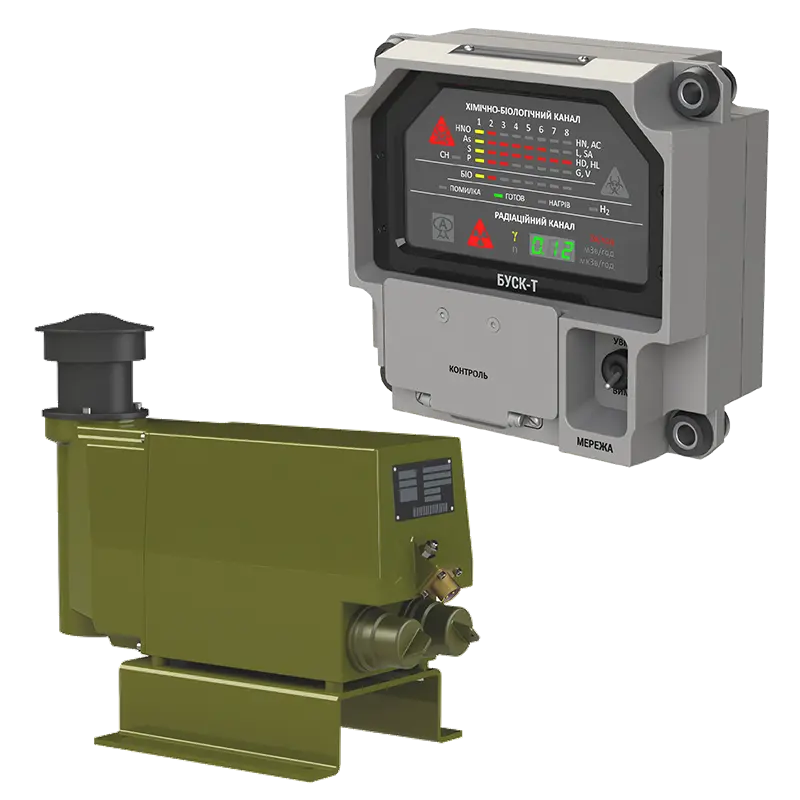
- Capability to detect in the air all known chemical warfare agents (CWAs) of nerve-paralytic, blister, general toxic, and certain choking types, as well as highly toxic substances containing sulfur, arsenic, phosphorus, ammonia, hydrogen sulfide, nitric acid vapors, etc.
- Powered from the vehicle’s onboard network
- Capability to detect biological agents:
- Bacteria – anthrax, plague, tularemia, brucellosis, typhus, cholera, glanders
- Viruses – smallpox, hemorrhagic fevers (Ebola, Marburg), arenaviruses (Lassa, Machupo), viral encephalitis
- Toxins – botulism, ricin toxin, staphylococcal enterotoxin
- Operating principle based on flame spectrometry technology, which ensures reliable performance under any environmental influence and provides the following advantages:
- No limitations on the number of detectable molecular types
- No need for inlet filters or membranes, eliminating clogging risks
- Capability to detect mixed products, unrefined substances, precursors, derivatives, and unknown compounds
- Very short recovery time after confirmed detection
- Insensitivity to external factors (dust, high humidity, diesel exhaust gases, etc.)
- Lowest false alarm rate compared to other technologies
Thanks to flame spectrometry technology, the device is the only detector that meets NATO’s recommended requirements for sensitivity, detection time, and recovery time.
Additionally, we offer the CRHR-T system, which is similar in purpose but does not provide biological reconnaissance capability.